
 EN
EN
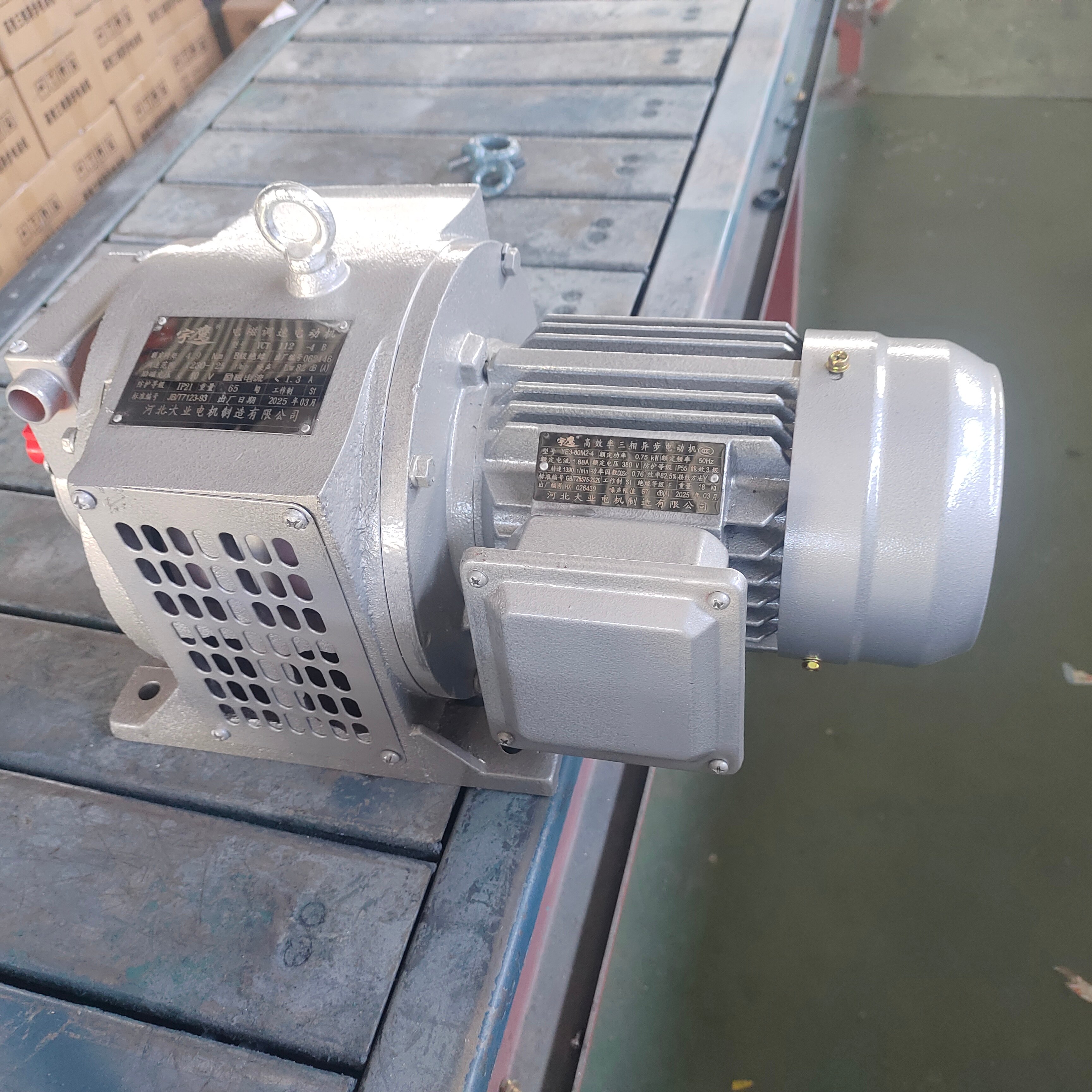
Selecting the appropriate industrial motor for your manufacturing operations represents one of the most critical decisions that can significantly impact productivity, energy efficiency, and operational costs. An industrial motor serves as the backbone of countless manufacturing processes, from conveyor systems and pumps to compressors and production machinery. The wrong choice can lead to premature failures, excessive energy consumption, and costly downtime that affects your entire production line. Understanding the key factors that influence motor selection will help you make informed decisions that optimize performance while minimizing long-term operational expenses.

Understanding Motor Types and Applications
AC Motors Versus DC Motors
The fundamental distinction between alternating current and direct current motors affects every aspect of your industrial motor selection process. AC motors dominate industrial applications due to their robust construction, lower maintenance requirements, and compatibility with standard power grid systems. These motors excel in applications requiring constant speed operation and can handle high-power demands efficiently. Three-phase AC motors particularly offer excellent power-to-weight ratios and smooth torque delivery, making them ideal for heavy-duty industrial applications.
DC motors provide superior speed control capabilities and high starting torque, characteristics that make them valuable for applications requiring precise speed regulation or frequent starts and stops. However, the presence of brushes in many DC motor designs introduces maintenance considerations that must be weighed against their performance advantages. Modern brushless DC motors address many traditional maintenance concerns while retaining the speed control benefits that make DC technology attractive for specialized industrial applications.
Synchronous and Asynchronous Motor Characteristics
Synchronous motors maintain constant speed regardless of load variations, operating at a speed directly proportional to the supply frequency. This characteristic makes them excellent choices for applications where precise speed control is paramount, such as timing systems or synchronized production lines. The ability to operate at unity or leading power factor also makes synchronous motors valuable for power factor correction in industrial facilities, potentially reducing electrical costs.
Asynchronous motors, also known as induction motors, represent the most common type of industrial motor due to their simplicity, reliability, and cost-effectiveness. These motors naturally adjust their speed based on load conditions, typically operating at speeds slightly below synchronous speed. The slip characteristic of asynchronous motors provides inherent overload protection and smooth acceleration, making them suitable for a wide range of industrial applications where precise speed control is not critical.
Power Requirements and Load Analysis
Calculating Power Needs
Accurate power calculation forms the foundation of proper industrial motor selection, requiring careful analysis of both continuous and peak power demands. The relationship between mechanical power output and electrical power input must account for motor efficiency, which varies significantly across different motor types and operating conditions. Oversizing motors leads to poor efficiency and higher operating costs, while undersizing results in premature failure and inadequate performance.
Load analysis should consider not only the steady-state power requirements but also the dynamic conditions during startup, acceleration, and varying load conditions. Many industrial applications involve cyclical loads or periodic peak demands that exceed normal operating requirements. Understanding these load patterns enables proper motor sizing that accommodates both normal operation and exceptional conditions without compromising reliability or efficiency.
Environmental and Operating Conditions
Operating environment significantly influences industrial motor selection, affecting everything from enclosure type to insulation class requirements. Temperature extremes, humidity levels, dust exposure, and chemical atmospheres all impact motor performance and longevity. Motors operating in harsh environments require special consideration for bearing types, sealing methods, and protective coatings that ensure reliable operation under challenging conditions.
Altitude considerations become important for facilities located at elevations above standard conditions, as reduced air density affects cooling capability and may require derating of motor power output. Similarly, applications involving frequent starts, stops, or reversing operations generate additional heat and stress that must be accommodated through proper motor selection and potentially enhanced cooling systems.
Efficiency and Energy Considerations
Energy Efficiency Standards and Classifications
Modern industrial motor efficiency standards have evolved to address growing energy costs and environmental concerns, with premium efficiency motors offering significant long-term cost savings despite higher initial investments. The relationship between motor efficiency and operating costs becomes particularly important in applications with extended run times or high power requirements, where even small efficiency improvements translate to substantial energy savings over the motor's operational life.
Understanding efficiency curves and how they relate to actual operating conditions helps identify the most cost-effective industrial motor for specific applications. Motors typically achieve peak efficiency at approximately 75-80% of their rated load, and efficiency drops significantly at very light loads. This characteristic emphasizes the importance of proper sizing to ensure motors operate within their optimal efficiency range during normal operation.
Variable Speed Drive Compatibility
Variable frequency drives have revolutionized industrial motor applications by enabling precise speed control and significant energy savings in applications with varying load requirements. However, not all motors are suitable for VFD operation, and proper selection requires consideration of factors such as insulation systems, bearing currents, and cooling requirements at reduced speeds. Understanding these compatibility factors ensures optimal performance when combining motors with variable speed drive systems.
The benefits of VFD-compatible industrial motor designs extend beyond energy savings to include improved process control, reduced mechanical stress, and enhanced system reliability. Applications such as pump and fan systems can realize substantial energy reductions through speed modulation rather than throttling control, making the investment in VFD-compatible motors and drives economically attractive for many industrial applications.
Installation and Maintenance Considerations
Mounting and Mechanical Integration
Proper mounting and mechanical integration significantly impact industrial motor performance and longevity, requiring careful attention to alignment, vibration control, and thermal management. Foundation design must accommodate both static loads and dynamic forces generated during operation, while providing adequate access for maintenance activities. Misalignment between motor and driven equipment represents one of the most common causes of premature bearing failure and reduced operational life.
Coupling selection and installation practices directly influence the transmission of power from the industrial motor to the driven equipment while affecting vibration levels and maintenance requirements. Flexible couplings can accommodate minor misalignment while providing vibration isolation, but they also introduce additional maintenance considerations and potential failure points that must be evaluated against their benefits in specific applications.
Preventive Maintenance and Monitoring
Developing comprehensive preventive maintenance programs extends industrial motor life while minimizing unexpected failures that can disrupt production operations. Regular monitoring of operating parameters such as current draw, temperature, and vibration levels provides early warning of developing problems before they result in costly failures. Modern monitoring systems can continuously track these parameters and alert maintenance personnel to abnormal conditions that require attention.
Bearing maintenance represents a critical aspect of industrial motor care, as bearing failures account for a significant percentage of motor problems in industrial applications. Understanding proper lubrication practices, including lubricant types, quantities, and replacement intervals, directly impacts bearing life and overall motor reliability. Environmental conditions and operating duty cycles influence maintenance requirements and should be reflected in maintenance scheduling and procedures.
Cost Analysis and Return on Investment
Initial Cost Versus Life Cycle Costs
Comprehensive cost analysis must consider both initial purchase price and long-term operational costs to identify the most economical industrial motor solution for specific applications. Energy costs typically represent the largest component of total cost of ownership, often exceeding the initial motor cost within the first year of operation for continuously running applications. This relationship emphasizes the importance of efficiency considerations in motor selection decisions.
Maintenance costs, including both scheduled preventive maintenance and unscheduled repairs, contribute significantly to life cycle costs and vary considerably between different motor types and applications. Premium motors with enhanced bearing systems, improved insulation, and robust construction may justify higher initial costs through reduced maintenance requirements and extended operational life in demanding industrial applications.
Productivity and Reliability Factors
The impact of motor reliability on overall production costs extends far beyond the motor itself, as unscheduled downtime can result in lost production, missed delivery schedules, and additional labor costs for emergency repairs. Quantifying these potential costs helps justify investments in higher-quality industrial motor solutions that offer improved reliability and reduced failure rates in critical applications.
Process improvement opportunities through better motor selection can provide additional return on investment through improved product quality, reduced waste, or enhanced production capacity. Applications requiring precise speed control or improved starting characteristics may benefit from premium motor technologies that enable process optimization beyond simple motor replacement scenarios.
FAQ
What factors should be considered when sizing an industrial motor for a specific application
Proper industrial motor sizing requires analysis of both continuous and peak load requirements, including consideration of starting torque demands, acceleration time requirements, and duty cycle variations. Environmental factors such as ambient temperature, altitude, and atmospheric conditions affect motor performance and may require derating. Additionally, future load growth potential should be considered to avoid premature motor replacement as system requirements evolve.
How do I determine if a motor is compatible with variable frequency drives
VFD compatibility depends on several motor characteristics including insulation system design, bearing construction, and cooling method. Motors designed for VFD operation typically feature enhanced insulation systems to handle voltage spikes and bearing systems designed to minimize circulating currents. Consult motor manufacturer specifications and consider factors such as minimum speed requirements and cooling adequacy at reduced speeds when evaluating VFD compatibility for your industrial motor application.
What are the key differences between premium efficiency and standard efficiency motors
Premium efficiency motors incorporate design improvements such as optimized magnetic circuits, reduced losses in windings and core materials, and enhanced cooling systems that result in efficiency improvements of 2-8% compared to standard motors. While initial costs are higher, the energy savings typically justify the investment within 1-3 years for continuously operating industrial motor applications. Premium efficiency motors also often feature improved power factors and reduced operating temperatures that can extend operational life.
How often should industrial motors undergo preventive maintenance
Preventive maintenance intervals for industrial motor systems depend on operating conditions, duty cycles, and environmental factors. Generally, monthly visual inspections, quarterly vibration and temperature monitoring, and annual comprehensive inspections provide adequate monitoring for most applications. However, motors operating in harsh environments or critical applications may require more frequent monitoring. Bearing relubrication intervals typically range from 3-12 months depending on motor size, speed, and operating conditions, while major overhauls may be required every 5-10 years based on operating hours and conditions.
Table of Contents
- Understanding Motor Types and Applications
- Power Requirements and Load Analysis
- Efficiency and Energy Considerations
- Installation and Maintenance Considerations
- Cost Analysis and Return on Investment
-
FAQ
- What factors should be considered when sizing an industrial motor for a specific application
- How do I determine if a motor is compatible with variable frequency drives
- What are the key differences between premium efficiency and standard efficiency motors
- How often should industrial motors undergo preventive maintenance